
Bring brand values to life and spark authentic community.
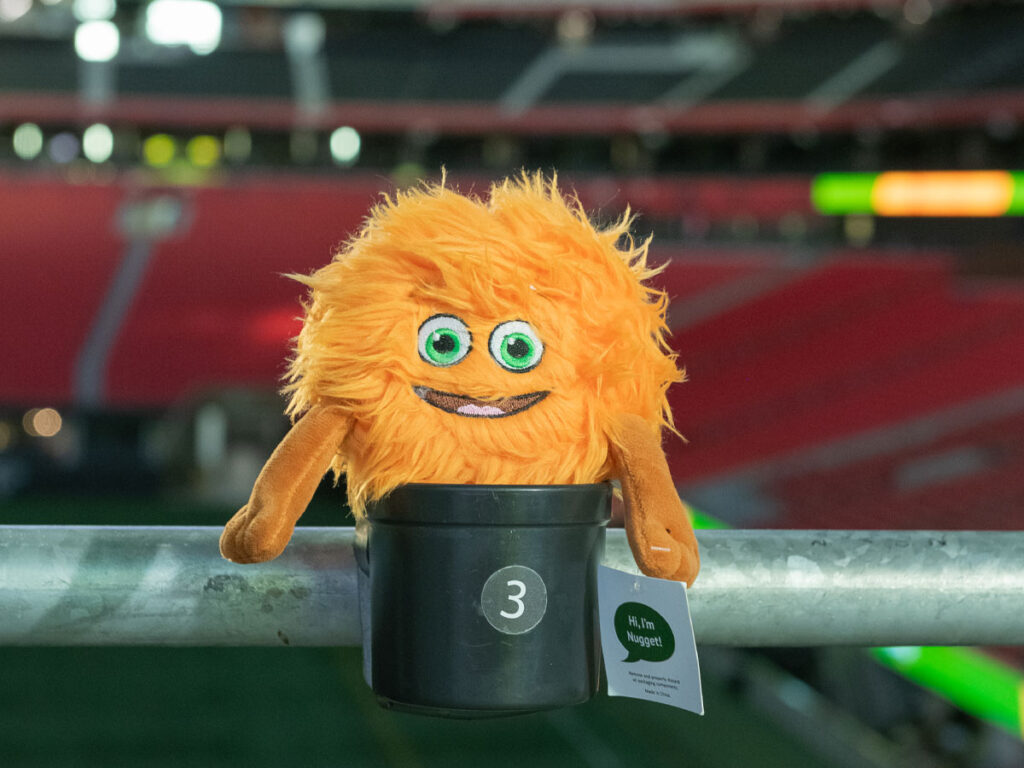
Years ago, when I told my team that I was trademarking a brand mascot called Nugget, I was met with disbelief. Maybe their hesitation came from memories of Microsoft’s mascot, Clippit (aka Clippy), the oddly animated paperclip that popped up at weird, annoying times. One employee said that Nugget, an orange monster representing hope, love, and learning, wouldn’t resonate with people in the trucking industry.
Today, Nugget is a treasured reminder of our company’s core values. Our mascot exists because I understood the power of brand mascots to unite clients and teams around a purpose. Brand mascots are more than a drawing or animation. They represent an organization’s values and are built with creativity to help its story come alive.
Opportunities for brand mascots exist in every industry. Many of us are familiar with iconic examples like the M&M crew, Tony the Tiger, and Smokey Bear. Mascots appear across sports arenas to grab attention, increase engagement, create social presence, and reinforce brand identity and values. Companies that use brand mascots well understand their ability to create nostalgia because mascots become memory anchors, tying emotions to meaningful contexts, like shared experiences at sporting events.
These artful, imaginative creatures create opportunities to build communities around impactful missions and values that can change us. With the help of mascots, we can bring our customers into communities that drive real change. In a time when disconnection feels like the default, brand mascots could be the missing piece that brings our customers together with intention and purpose.
Here are some examples of why and how businesses in transportation and logistics use mascots to engage customers.
Reinforce values and brand
Mascots reinforce a company’s values and brand identity, drawing in both teams and clients. Tracy Rushing of R.E. Garrison Trucking recognized the opportunity to introduce a mascot to showcase their company values. Their safety mascot, Terry the Trucking Turtle, embodies safety and responsibility on the road. As the “King of the Road,” Terry has become a respected and beloved figure among their drivers. With his wise and cautious approach to driving, Terry sets an excellent example for others to follow. His motto, “Safety First,” reminds everyone on the team to prioritize safety above all else, and customers know that this organization values safety because its mascot reinforces it daily.
Get attention
Mascots spark interest and help a company stand out. Recently, Inc. hosted its annual Inc. 5000 Conference, celebrating the top entrepreneurs leading the fastest-growing private companies. During the gala event, they read aloud the 5,000 companies that made the list. As a learning company, Luma Brighter Learning, a three-time Inc. 5000 honoree, used an animated version of our brand mascot dancing to draw the crowd’s attention. In the end, mascots don’t just stand out; they make sure your brand gets remembered.
Create social presence and engagement
Social presence builds trust, credibility, and meaningful relationships with customers. While logos are standard, brand mascots tell a story that connects audiences to your purpose. NoDwell founder Blake Lappen created SPOT to boost recognition and engagement. Now the purple light with the bright green “on” button is instantly associated with the company’s mission to eliminate downtime waste.
Animation can also affect engagement. Research has found that e-commerce websites featuring an animated mascot, compared with no mascot or a static one, tend to increase users’ sense of social presence and engagement. This, in turn, can lead to improved outcomes such as higher revisit and purchase intentions. For example, Nugget greets users on Luma’s learning platform, blinking, waving, and sharing positive messages. This extends Nugget’s presence and spreads hope, love, and learning to transportation and logistics fleets worldwide.
Build emotional resonance (nostalgia)
Having a brand mascot does not automatically lead to better marketing outcomes. Contextual factors, like brand category, target audience, and execution matter for engagement. At the recent G&D Trucking/Hoffman driver appreciation event, the company introduced Hoffy, the Hoffman Tank truck alongside their family coloring book. A surprised audience gasped, and it created an unforgettable buzz for many in attendance. The company used its mascot to extend its community beyond employees, to families and partners.
These examples of brand mascots remind us that business isn’t only about transactions. It’s about building connections and meaningful communities that create emotional resonance. Mascots bring stories and shared values to life, giving organizations a memorable way to unite people around purpose and mission.
Article originally published on Dec 17, 2025 on Inc.com.